

German startup turns insects into robots
Introduction
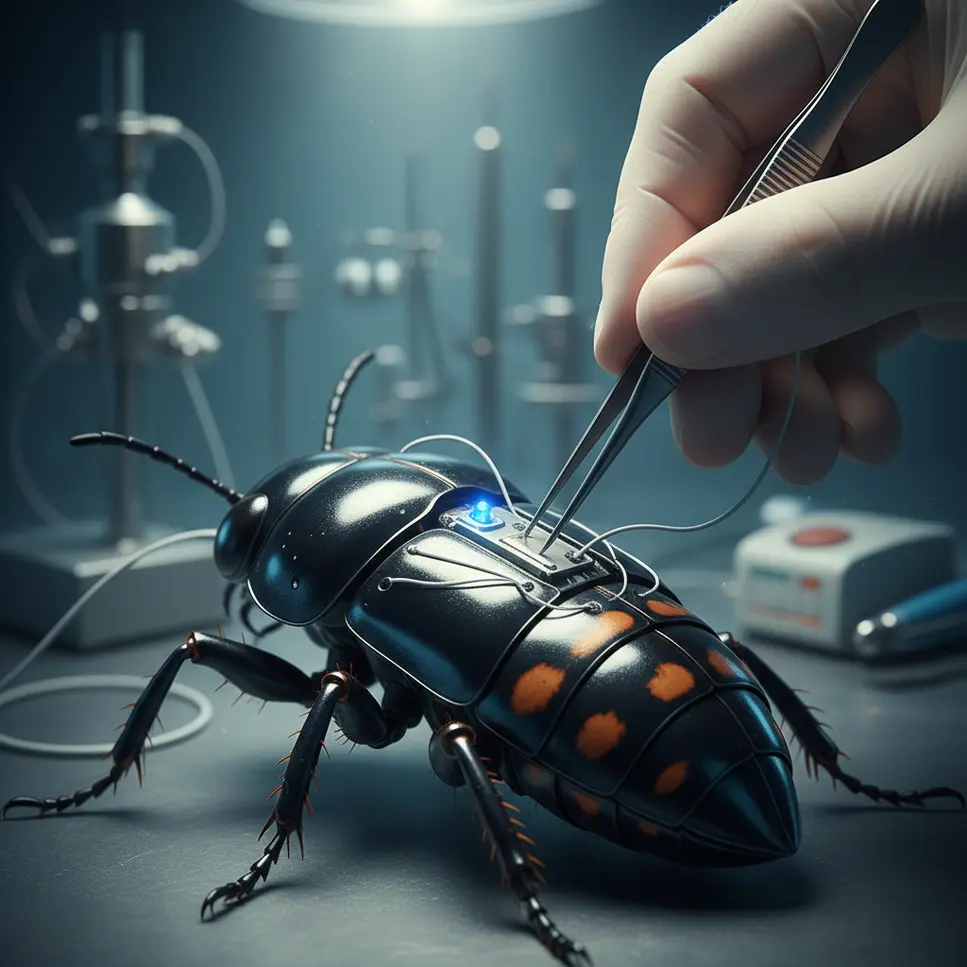
Recent advances in robotics and artificial intelligence have enabled groundbreaking innovations beyond traditional machines, extending into the realm of biological organisms. A pioneering German startup is transforming common insects, specifically cockroaches, into highly sophisticated cyborg platforms capable of remote surveillance and reconnaissance. This integration of living organisms with state-of-the-art sensors, cameras, and AI systems represents a unique leap in robotic applications and military technology. The intricate fusion of biology and engineering opens new frontiers for cost-effective, energy-efficient operations, disrupting usual paradigms related to drones and robotic vehicles.
- Integration of sensors and cameras in cockroach-based cyborgs equipped for espionage
- Application of real-time AI control and processing for remote navigation and data analysis
- Use of secure communication protocols linking insect cyborgs to military-grade AI systems
- Significant cost advantages over traditional drones and tactical robots
- Emerging ethical and regulatory challenges regarding bio-cybernetic organisms
Explaining the Technology Behind Insect Cyborgs
The core technical innovation involves implanting micro-sized sensors and high-resolution cameras onto cockroaches, thereby converting them into fully controllable robotic agents. These biological carriers are integrated with artificial intelligence software capable of precise remote guidance and real-time environmental processing. AI algorithms analyze sensory input instantaneously, enabling responsive navigation through complex terrains without operator interference. Furthermore, these systems utilize encrypted communication channels to securely transmit intelligence data to command centers while integrating seamlessly with established military AI frameworks. This intricate interplay of hardware and software effectively assigns living organisms operational roles traditionally reserved for mechanized robots.
Historical and Market Context
The concept of employing biological organisms as robotic platforms has evolved alongside increasing investments in artificial intelligence and autonomous surveillance by military entities across the globe. In Germany, the startup ecosystem has responded robustly to defense modernization, particularly emphasizing AI and robotics-inspired rearmament strategies. Companies such as Helsing, valued at US$ 12 billion, and ARX Robotics are contemporaries in developing AI-powered military tech, complementing the efforts of the leading insect-cyborg developer, Swarm Biotactics. The German approach signals a broader trend in defense innovation, where living organisms serve as low-footprint, cost-effective, and versatile platforms for intelligence gathering.
- Helsing specializes in AI-driven threat detection algorithms in real time
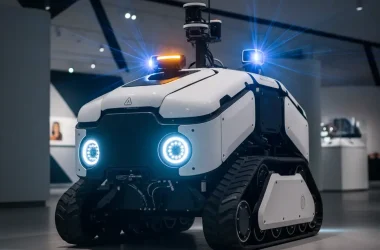
- ARX Robotics produces tactical terrestrial robots with advanced mobility
- Swarm Biotactics leads in cyborg insect biological platforms
Technical Data and Operational Insights
The production scale of cyborg insects is designed to meet high volume demands, leveraging cost benefits far exceeding those of conventional surveillance drones, which often require multimillion-dollar budgets. The use of living organisms results in significantly lower energy consumption, as the metabolic functions of insects provide natural locomotion, eliminating the need for mechanical propulsion. Integration with AI control software ensures precision and responsiveness, transforming natural behavior into mission-oriented tasks. Such scaling potential coupled with advanced sensor fusion technology is transforming battlefield intelligence methodologies.
Practical Applications and International Benchmarks
In practical terms, these insect cybernetic systems are being deployed principally for reconnaissance, urban security, and search and rescue operations, where their small form factor and agility in tight, hazardous environments provide clear operational advantages. Compared internationally, similar concepts are being explored by research institutions and startups in the United States and Israel, where integrating AI with biologically inspired robotics forms a critical focus area for tactical innovation. The comparison highlights Germany’s particular strength in merging AI military applications with bio-robotics, pushing the parameters of what robotic systems can achieve in real-world, risk-laden scenarios.
“The fusion of biological organisms with robotics and AI heralds a paradigm shift in tactical reconnaissance, enabling unprecedented stealth and efficiency.”
Future Perspectives and Challenges
Looking ahead, the convergence of AI, robotics, and bioengineering is poised to accelerate, yet the rapid pace introduces complex challenges — especially ethical and regulatory. Currently, no international standards or ethical frameworks, akin to ISO certifications for biological cyborgs, govern the deployment and control of such organisms. This regulatory vacuum raises concerns about proliferation, misuse, and ecological impact. Industry leaders urge collaborative governance frameworks to balance innovation with societal responsibility, promoting transparency and sustainable development in this emergent frontier.
Impact Assessment
The economic benefits of employing insect cyborgs stem from drastically reduced operational expenses when compared with high-cost drones or robotic units, potentially democratizing access to advanced surveillance for smaller agencies. Environmentally, leveraging living organisms reduces sustainable energy demands, as biological movement replaces mechanical energy consumption. Socially, these technologies extend capabilities in critical areas such as urban safety and disaster recovery. Equally, the multifunctional potential of these biological robots signals a transformative shift impacting the global robotics landscape and military strategy alike.
Summary and Recommendations
- Continue to develop and refine AI control algorithms for enhanced precision and autonomy.
- Establish international ethical standards to mitigate risks associated with bio-robotic proliferation.
- Explore civilian applications, including environmental monitoring and disaster response.
- Promote interdisciplinary collaboration between biologists, engineers, and policy makers.
- Invest in scalable manufacturing capable of meeting both military and commercial demands.
“Balancing technological advancement with ethical stewardship is imperative to harness the full potential of insect robotics.”
Frequently Asked Questions
Como funcionam os insetos ciborgues em termos tecnológicos?
Os insetos ciborgues são equipados com sensores miniaturizados e câmeras implantadas que transmitem dados em tempo real. Eles são controlados por inteligência artificial que permite o direcionamento remoto e análise instantânea do ambiente, garantindo respostas rápidas e flexíveis à dinâmica do terreno.
Quais são os principais benefícios dos insetos ciborgues em comparação com drones tradicionais?
Eles apresentam custos operacionais significativamente menores, consomem menos energia por utilizarem o movimento biológico do inseto, e possuem tamanho reduzido que permite acesso a áreas de difícil penetração, com alto grau de discrição.
Existem preocupações éticas relacionadas ao uso de insetos ciborgues?
Sim, atualmente não existem normas específicas para regulamentar a criação e uso de organismos biológicos modificados e controlados eletronicamente, o que levanta questões sobre direitos animais, proliferação descontrolada e possíveis implicações ambientais e sociais.