



When an Eastern Han legend meets modern engineering: Exploring China’s great builds
China’s monumental approach to engineering represents a fascinating fusion of ancient ingenuity and cutting-edge technology. These megaprojects not only embody advanced hydraulic and structural techniques but also reflect the nation’s ambitious strides toward sustainable energy and comprehensive river management. This article delves into how legendary inspirations from the Eastern Han period resonate within the framework of China’s modern engineering marvels, offering insights into their technical prowess, economic significance, and socio-environmental implications.
- Elevated hydraulic engineering capable of moving vessels up to 500 tons
- Advanced soil consolidation in seismically active mountainous regions
- Multifunctional infrastructure integrating power generation, flood control, and waterways transport
- Data highlights of major dams including Goupitan and Motuo
- Economic, environmental, and social impacts of large-scale projects
- Critical assessment of seismic safety measures
- Global trends in renewable energy and megaproject development
Advanced Hydraulic Engineering: A Modern Echo of Historical Vision
The engineering feats observed in China’s hydropower projects exemplify an extraordinary progression from historical lifting mechanisms described in Eastern Han legends to state-of-the-art ship elevators capable of hoisting vessels weighing up to 500 tons. This sophisticated hydraulic engineering signifies a leap in design complexity, enabling improved navigability and enhanced operational efficiency along China’s extensive river networks. The synchronization of hydraulic technologies with riverine ecosystems demonstrates a meticulous attention to balancing human utility and natural dynamics.
Context and Historical Foundations
Rooted deeply in millennia-old traditions of water management, China’s contemporary engineering giants resonate with ancient innovations recorded during the Eastern Han era. These historical precedents laid the groundwork for intricate canal and dam systems that modern engineers have exponentially expanded upon. As China transitioned from rudimentary water control to mega-structural implementations, the evolution reflects not only technological maturation but also a strategic alignment with national development priorities and environmental stewardship.
Technical Data and Infrastructure Insights
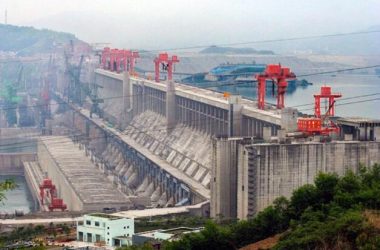
The scale and complexity of China’s hydropower dams are staggering by any international standard. The Goupitan Dam, standing at an imposing 232.5 meters and delivering 3,000 megawatts of power, exemplifies the integration of engineering prowess and economic planning, with an initial investment surpassing 775 million USD since 2003. Similarly, the Motuo Dam generates an estimated 300 billion kWh annually, tripling the capacity of the famed Three Gorges Dam. Such projects showcase the strategic utilization of geological and hydrological studies to optimize power output and infrastructural resilience.
- Goupitan Dam: Height – 232.5 m, Energy Output – 3,000 MW, Cost – 775 million USD
- Motuo Dam: Annual Production – 300 billion kWh, Capacity – 3 times greater than Three Gorges
- Population Displaced: 1.3 million (Three Gorges), 19,000 (Goupitan)
Multifunctionality and Global Comparisons
Chinese hydropower projects distinguish themselves by their multifaceted design, effectively combining energy generation with flood control and enhancing inland waterway transportation. This holistic approach contrasts with many global counterparts where dams typically emphasize power generation singularly. For example, the Itaipu Dam shared by Brazil and Paraguay, while immense in output, lacks the comprehensive integration of transportation and flood mitigation infrastructure seen in the Yangtze River megaprojects. This strategy reflects China’s alignment with future-oriented sustainability and infrastructural resilience paradigms.
Economic, Environmental, and Social Impacts
The economic ripple effects of these megaprojects are profound, notably in reducing river transport times and reinforcing China’s logistic chains. Nevertheless, they carry significant environmental costs, including ecosystem disruptions and exacerbated seismic risks due to their location in tectonically active zones. The social fabric has also been markedly impacted, exemplified by the displacement of over a million inhabitants during the Three Gorges Dam project. These aspects underscore the necessity of balanced engineering that responsibly negotiates trade-offs between progress and preservation.
- Economic: Enhanced transportation efficiency and regional integration.
- Environmental: Risks to biodiversity and earthquake vulnerability in geologically complex areas.
- Social: Population resettlement challenges and cultural heritage considerations.
Critical Perspectives on Seismic Safety
Despite the impressive scale and technological sophistication, questions remain regarding the transparency and robustness of seismic safety protocols. Located at the confluence of the Indo-Eurasian tectonic plate, these mega-structures demand advanced, rigorously tested engineering solutions to mitigate earthquake hazards. The current paucity of publicly available detailed information on these safety measures suggests an area requiring heightened scrutiny and scientific accountability, promising a fertile ground for research and policy enhancement.
“The absence of detailed seismic safety disclosures in China’s major hydropower projects poses significant questions on long-term infrastructural resilience.”
Future Perspectives and Recommendations
Looking forward, the shift towards renewable energy and carbon neutrality by 2060 positions China’s hydropower megaprojects as critical pillars in global climate initiatives. Strengthening international cooperation and adopting best practices from global benchmarks can further optimize safety, environmental sustainability, and social integration. Proactive stakeholder engagement and investment in adaptive technologies will be essential to reconcile ambitious development goals with ecological and human well-being.
Frequently Asked Questions
What makes China’s hydropower projects unique compared to others worldwide?
China’s hydropower projects integrate multiple functionalities like energy production, flood control, and navigation, surpassing many global dams that focus primarily on electricity generation. The scale, technological innovation, and alignment with national climate goals also distinguish these structures.
How does the displacement of populations affect the social landscape?
Large-scale resettlement, such as the 1.3 million displaced by the Three Gorges Dam, significantly alters community dynamics, cultural heritage continuity, and economic livelihoods. Effective resettlement policies and compensation mechanisms are crucial to mitigate negative social impacts.
What are the main environmental concerns related to these dams?
Environmental issues include disruption to aquatic ecosystems, loss of biodiversity, sediment flow alteration, and increased seismic risks due to dam construction in tectonically sensitive zones.