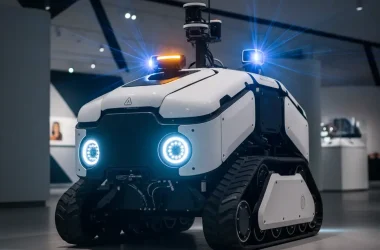


Why Reliability, Not Acrobatics, Will Define Humanoid Robots
Humanoid robots have long captivated public and scientific imagination through their dexterity and human-like movements, yet the true challenge in their evolution lies not solely in acrobatics, but in establishing robust reliability. This article delves into the multifaceted dimensions defining the future of humanoid robots, emphasizing the critical need for dependable performance, compliance with safety standards, and contextual adaptability, which collectively dictate their practical and social viability.
- Understanding the technical frameworks governing humanoid robot safety and reliability.
- Overview of current market leaders and technological milestones in autonomy and control.
- Comparative international dynamics influencing robotic development.
- Economic, social, and technical impacts shaping adoption and innovation.
- Insights into future perspectives and gaps in standardizations.
Technical Foundations and Safety Regulations
At the core of designing reliable humanoid robots is adherence to rigorous safety and reliability standards. The European ISO 12100 norm stands as a harmonized benchmark focusing on machinery safety, especially critical for human-robot collaboration scenarios. Complementing this, the European Machinery Directive imposes stringent occupational safety demands tailored to humanoid robots operating in dynamic human environments. These regulations stimulate manufacturers to integrate fail-safe mechanisms and systematic fault analyses, spanning electrical, electronic, hydraulic, and pneumatic subsystems, thus fostering dependable robot operation.
Robust reliability assessment methodologies play a crucial role in this process, leveraging probabilistic characterization of failure modes to predict and mitigate system vulnerabilities. However, an important gap remains in the direct application of such methods — typically well-established in industrial robotics — to commercially deployed humanoids. This disparity underscores an urgent need for quantifiable reliability metrics like Mean Time Between Failures (MTBF), failure rate, and operational availability, which remain scarcely documented for current humanoid models.
Advanced Intelligent Systems: Linguistic and Visual Processing
Modern humanoid robots increasingly rely on sophisticated cognitive subsystems to interpret and respond to human commands. Natural Language Processing (NLP) algorithms enable these machines to parse complex verbal instructions and adapt their behavior based on environmental context, a critical capability for effective interaction. Parallelly, Visual Language Models aim to fuse sensory inputs with linguistic understanding, although their current limitations in generalization pose a significant barrier to fully autonomous decision-making.
These intelligence systems form a symbiotic foundation supporting functional reliability. Without robust NLP and vision models, humanoids risk unreliable task execution or unsafe interactions, thereby compromising both social acceptance and practical utility. Therefore, achieving seamless integration of these cognitive modules remains a top strategic priority among researchers and developers.
Market Leaders and Technological Benchmarks
The competitive landscape of humanoid robotics is shaped by key players such as Prosper Robotics, Boston Dynamics, and Google, each advancing unique paradigms. Prosper Robotics’ Alfie robot prioritizes reliability and ethical considerations, with its first iteration achieving merely 20% autonomy supplemented by 80% remote human supervision. This highlights the current technological limitations and the reliance on human-in-the-loop systems to ensure performance and safety.
Boston Dynamics is pushing boundaries through ambitious autonomous learning experiments, nurturing robots capable of acquiring complex tasks via human observation — a milestone still an estimated decade away from practical realization. Google’s PaLM-E architecture integrates sensory interpretations into advanced reasoning frameworks, setting new standards for multimodal robotic cognition. These developments collectively map an intricate trajectory where reliability must balance with the incremental gains in autonomy and versatility.
Global Trends and Regional Strategies
On a macro level, geopolitical and economic strategies exert considerable influence on humanoid robotics progression. China’s assertive regional push prioritizes mass production of humanoid robots, focusing less on anthropomorphic perfection and more on dependable operational functionality within defined environments. This contrasts with Western approaches more oriented toward ethical AI and robust collaboration frameworks.
Across these divergent strategies, a shared recognition emerges: societal acceptance hinges heavily on trust and confidence rather than visual realism or acrobatic prowess. This insight signals a paradigm shift where human-robot interfaces are evaluated primarily on steadfast reliability and safety assurances, critical elements for widespread integration into industries and public domains.
Economic, Social, and Technical Impact
- Economic: Elevated costs in research and development coupled with restricted autonomy capability delay commercial scalability and widespread deployment.
- Social: Persistent public concerns over privacy, ethics, and reliability in AI-driven decision-making processes impede societal acceptance and trust.
- Technical: Current limitations in generalizing from training data and vision systems curtail operational consistency and robust autonomous performance.
“Prioritizing reliability over acrobatics is vital for the credible adoption of humanoid robots in real-world applications.” — Industry Expert on Robotics Reliability
Future Perspectives and Identified Gaps
Looking ahead, the integration of standardized reliability metrics tailored to humanoid robots is imperative. Despite long-standing methodologies for industrial robots, their systematic application within commercially available humanoids is deficient, forming a critical gap between theory and practice. Addressing this will require cross-disciplinary collaborations that unite robotics engineering, AI ethics, and regulatory frameworks to deliver comprehensive models of dependability.
Furthermore, enhancing generalization capabilities in vision-language models and expanding context-aware intelligence will underpin the transition from supervision-heavy systems to genuinely autonomous humanoids. A ten-year horizon remains an optimistic estimate for robots to match complex human task proficiency autonomously, underscoring the need for sustained innovation and realism in goal-setting.
Frequently Asked Questions
Why is reliability more important than acrobatics in humanoid robots?
Reliability ensures consistent and safe performance of humanoid robots in dynamic real-world environments, which is essential for practical deployment. While acrobatics showcase advanced motor skills, they do not guarantee dependable function or safety, which are paramount for acceptance and application.
What are the current limitations of vision language models in robotics?
Current vision language models lack strong generalization ability, meaning they struggle to interpret sensory data reliably across varied and unseen contexts, limiting autonomous decision-making capabilities in robots.
How long until humanoid robots can operate fully autonomously?
Estimates suggest around 10 years before humanoid robots can autonomously learn complex tasks by observing humans, although advancements depend heavily on breakthroughs in AI and robotics integration.
Leia também
Conclusão e Recomendações
Conclui-se que para que os robôs humanoides avancem além de protótipos habilidosos, a confiabilidade deve ser o vetor principal do desenvolvimento tecnológico. Integrar normas internacionais de segurança, aperfeiçoar os sistemas cognitivos e implantar métricas quantificáveis de desempenho serão essenciais para cumprir essa meta, garantindo a confiança dos usuários e a viabilidade comercial. O caminho para a aceitação social repousa no equilíbrio entre tecnologia de ponta e responsabilidade ética.
Especialistas recomendam que indústria e reguladores priorizem esforços colaborativos focados em confiabilidade operacional e transparência de algoritmos para acelerar a integração segura desses sistemas robóticos no cotidiano. Compartilhe este conteúdo para fomentar a discussão sobre as próximas gerações da robótica humana!