



NASA Artemis II mission prepares for launch
After decades of human absence on lunar missions, NASA’s Artemis II is poised to reignite mankind’s journey to the Moon. This upcoming mission, focused on testing new technologies and expanding our extraterrestrial capabilities, represents a monumental leap in space exploration. As NASA completes critical tests such as the wet dress rehearsal, every detail points to the meticulous engineering and international collaboration fueling this venture. Artemis II marks a significant milestone in humanity’s deep space ambitions, bringing the promise of sustainable lunar presence closer to reality.
- Wet dress rehearsal: simulating launch fueling and countdown
- Technologies involved: Space Launch System (SLS) megarocket and Orion spacecraft
- Launch window: no earlier than February 8, 2026, with backup slots on February 10 and 11
- Mission duration: approximately 10 days
- Environmental and logistical challenges impacting timeline
- First lunar mission including a Canadian astronaut among four crew members
Understanding the Core Technologies and Procedures
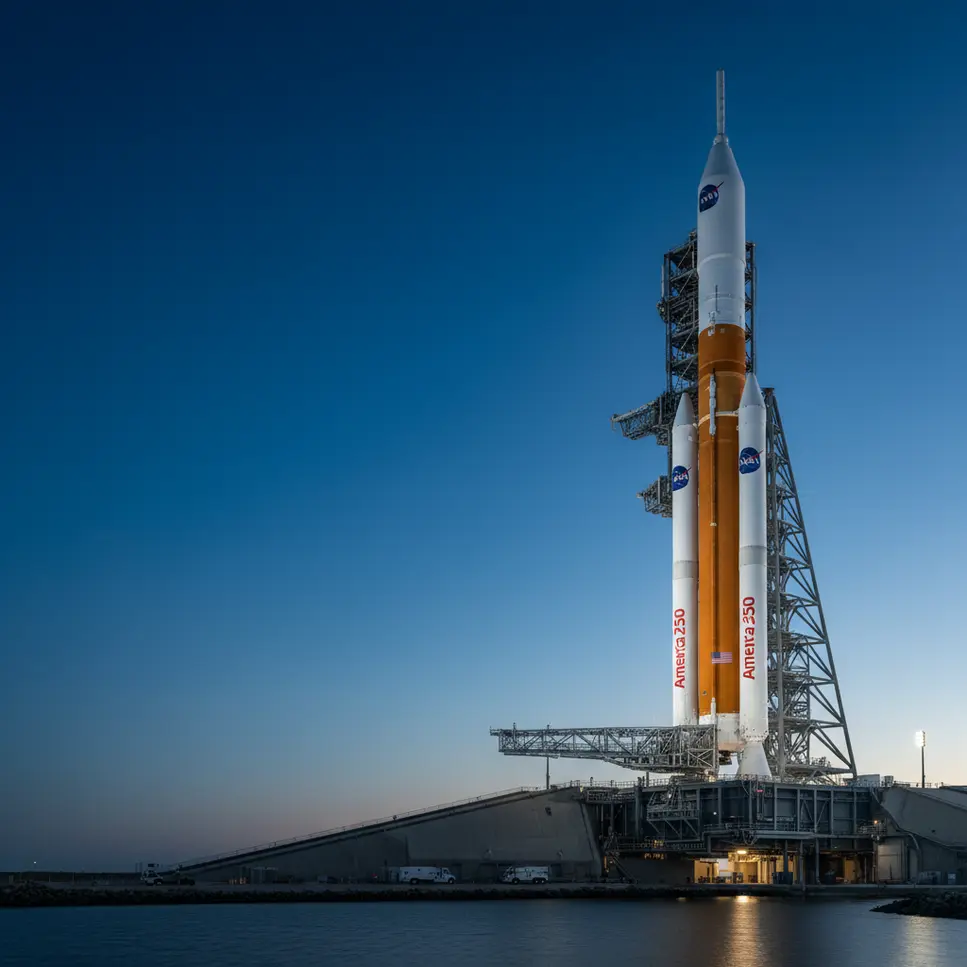
The Artemis II mission hinges on the proven methodology known as the “wet dress rehearsal,” a fully simulated countdown and fueling operation designed to validate all major launch systems without liftoff. This test occurs at Launch Pad 39B in the Kennedy Space Center, Florida, utilizing the Space Launch System (SLS)—a state-of-the-art megarocket engineered to propel the Orion spacecraft beyond Earth orbit. The Orion, developed in partnership with Boeing, is central to crewed lunar exploration objectives, providing life-support and navigation capabilities for the astronauts during their ten-day mission. Through rigorous simulations and hardware integration, NASA ensures that both rocket and spacecraft meet the highest safety and reliability standards required for deep space travel.
Historical Context and Renewed Lunar Ambitions
The Artemis II mission embodies a historic resurgence in human spaceflight activities focused on the Moon, the first since the Apollo missions ceased in 1972. This endeavor reignites decades-old aspirations through the Artemis program, which intends not only to facilitate a crewed lunar orbit mission but also to lay the groundwork for establishing a sustainable lunar base and future Mars expeditions. By integrating advanced aerospace technologies with international cooperation, Artemis represents a leap from past achievements toward a new era of exploration. Notably, this mission will include Canada’s first astronaut to fly beyond low Earth orbit, symbolizing a more global approach to space exploration.
Technical Data and Mission Parameters
Slated for launch no earlier than February 8, 2026, with contingency launch opportunities on the 10th and 11th, Artemis II is designed as a ten-day crewed mission. The timeline has been shaped by critical pre-launch procedures such as the wet dress rehearsal conducted on February 2, 2026, which involved a simulated countdown commencing at 8:13 p.m. Eastern Standard Time and culminating with a mock T-0 liftoff at 9:00 p.m. The SLS rocket’s fueling operations tested during this rehearsal are crucial to verifying the propulsion and fueling infrastructure under realistic conditions. The mission’s comprehensive data analytics will guide final go/no-go decisions, with NASA balancing technical readiness against environmental variables including cold weather and winter storms, factors already contributing to schedule adjustments.
- Launch Pad: 39B, Kennedy Space Center, Florida
- Launch vehicle: Space Launch System (SLS) Block 1 megarocket
- Crew capsule: Orion spacecraft by Boeing
- Mission duration: 10 days in lunar orbit
- Crew: Four astronauts, including the first Canadian beyond low Earth orbit
Global Industry Collaborations and Technological Benchmarks
The Artemis II mission is emblematic of broad collaboration across key aerospace players such as SpaceX, Boeing, and Northrop Grumman. Notably, SpaceX contributes with its Falcon 9 and Dragon spacecraft for cargo and crew missions such as Crew-12 to the International Space Station (ISS), while Boeing supplies the Orion spacecraft – designed explicitly for deep space missions. Northrop Grumman supports the SLS with critical structural components. This multi-company synergy enables NASA to push the frontier of human spaceflight by integrating the best practices and innovations from around the world. When compared internationally, Artemis II’s technological sophistication aligns with other leading deep space initiatives, such as the European Space Agency’s Lunar Gateway project, affirming the United States’ leadership role amid a more competitive global space sector.
Impact Analysis: Economic, Environmental and Social Dimensions
The Artemis II mission’s intricate orchestration impacts multiple sectors beyond aerospace engineering. Economically, the prioritization of Artemis II has led to the postponement of the Crew-12 ISS mission to February 19, illustrating how high-stake projects necessitate resource prioritization and scheduling agility. Environmental conditions, notably frozen temperatures and severe winter storms, pose natural challenges requiring adaptive planning and contingency budgeting. On a social front, Artemis II advances diversity and international engagement by including the first Canadian astronaut to venture into lunar orbit. The crew of four astronauts symbolizes international solidarity and the human dimension behind technological feats, inspiring public interest and international partnerships supporting peaceful space endeavors.
“The Artemis II mission demonstrates that human space exploration remains a pinnacle of engineering achievement and international cooperation, pushing boundaries on multiple fronts simultaneously.”
Future Outlook and Strategic Recommendations
Looking forward, Artemis II represents a critical stepping stone within NASA’s broader goals for lunar exploration and eventual Mars missions. However, its success is heavily contingent on the outcomes of the wet dress rehearsal, underscoring a vulnerability characterized by potential day-for-day launch delays that have yet to be critically quantified. NASA and its partners must therefore emphasize contingency planning and flexible scheduling, integrating real-time environmental and technical feedback to mitigate risks. Long-term, continuous innovation in propulsion, crewed spacecraft design, and ground infrastructure will be essential to ensure the Artemis program meets its ambitious objectives. Strategic investments in international partnerships and in-space habitat technologies will further enhance mission resiliency and expand humanity’s extraterrestrial footprint.
Frequently Asked Questions
What is the purpose of the Artemis II mission?
Artemis II aims to conduct the first crewed lunar orbit mission since Apollo 17 in 1972, testing integrated launch systems, spacecraft life support, and navigation technologies in preparation for future extended lunar exploration and Mars missions.
When is the scheduled launch?
The launch is planned for no earlier than February 8, 2026, with additional launch windows on February 10 and 11, pending successful completion of pre-launch tests such as the wet dress rehearsal.
What makes the wet dress rehearsal critical?
The wet dress rehearsal simulates the complete fueling and countdown sequence without actual launch, verifying the performance and readiness of the rocket’s fuel systems and operational procedures essential for mission success.
How does Artemis II compare internationally?
Artemis II’s technologies and mission objectives are comparable to other global initiatives like the European Lunar Gateway, emphasizing cooperative human deep space exploration and laying foundational infrastructure for sustained lunar presence.