




Students Build Autonomous Snowplow Robot for International Competition
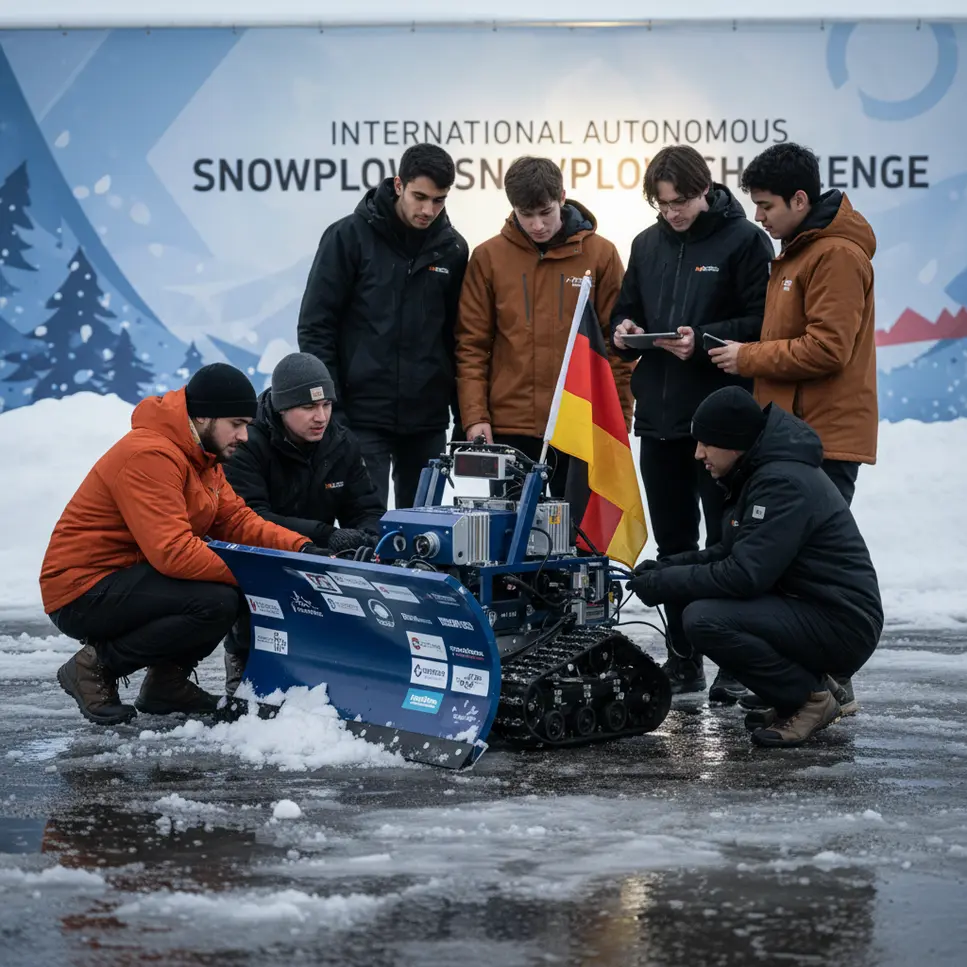
In the realm of robotics engineering and competitive innovation, a group of students has developed an autonomous snowplow robot designed specifically to address the challenges of snow removal in extreme climates. This project showcases sophisticated integration of hardware and software, involving sensor fusion, precise motor control, and rugged mechanical design, all crafted to perform reliably under harsh environmental conditions. By entering an international competition, these students not only push the boundaries of robotic capability but also contribute to advancing automation solutions that can drastically reduce manual labor and emissions linked to traditional snowplowing techniques.
- Development of an Arduino-based control system with LIDAR sensors
- Implementation of advanced locomotion via tracked and wheeled mechanisms
- Use of ROS platform for sensor data processing and navigation
- Engineering challenges unique to autonomous snow removal on icy terrain
- Comparison with global robotic innovations in similar industrial applications
Technical Foundations and System Architecture
The project’s core technical framework leverages an Arduino microcontroller acting as the central processing unit, orchestrating sensory inputs and mechanical outputs through precise Pulse Width Modulation (PWM) strategies. By combining DC motors controlled via a transistor-based L298 bridge, the robot achieves nuanced movement control including directional inversion critical for maneuvering through dense snow. The integration of LIDAR sensors operating under the Robot Operating System (ROS) enables real-time environmental mapping and obstacle detection at a proximity threshold of 20 centimeters. This layered architecture ensures the robot’s autonomia by harmonizing hardware durability and advanced software algorithms for situational awareness.
The structural elements, made from precision-machined aluminum paired with high-strength CIBATOOL resin components, contribute to a lightweight yet resilient chassis capable of enduring mechanical stress during operations on slippery ice surfaces. Power management is optimized through dedicated DC-DC converters alongside linear regulators supplying stable 5V control voltage, while ancillary power needs are met with 9V bench sources, allowing for consistent energy delivery amid variable workloads. This precise orchestration of electrical and mechanical systems exemplifies engineering rigor fundamental to autonomous robotics.
Historical Context and Competitive Landscape
Autonomous robotics has seen progressive growth in application areas ranging from industrial inspection to consumer electronics. However, the niche of autonomous snow removal robot competitions remains relatively nascent with limited documented precedents. While robotic competitions such as sumo and maze solving have established well-understood frameworks, the application of mechatronic autonomy to environmental maintenance tasks, particularly in unpredictable weather conditions, represents a pioneering frontier.
Globally, organizations like VEX Robotics Competition (V5RC) have cultivated a robust ecosystem for developmental robotics, but specific emphasis on snowplow functionality under competitive rules is minimal. This novelty introduces complex technical challenges such as ensuring sensor accuracy in cold environments, traction management over melting snow and ice, and sustainable power consumption during extended continuous operation. The student team’s approach fills this void by executing a structured five-phase project methodology, including conception, iterative testing, rigorous programming, validation on controlled benches, and field validation.
Data and Specifications that Define Performance
- Obstacle detection radius: up to 20 centimeters with high precision LIDAR sensors
- Control voltage: stable 5V rail powering microcontroller and sensors
- Operational voltage: supplementary 9V power supply facilitating motor and sensor demands
- Speed regulation: up to 120 PWM units for finely tuned velocity adjustments
- Development phases: conceived through a structured approach including design, testing, programming, bench validation, and field trials
These specifics underscore the robotic system’s capability to navigate and operate with high fidelity while responding dynamically to environmental stimuli. The PWM-driven motor control enables seamless acceleration and deceleration vital for maneuvering uneven icy terrains during snow removal, while the precision of the LIDAR-driven detection framework ensures obstacle avoidance and operational safety.
Practical Applications and Market Relevance
The practical significance of autonomous snowplow robots extends beyond competitive robotics into emergent markets, which include infrastructure maintenance and environmental automation. The technology holds promise for deployment in high-demand scenarios such as urban snow removal and remote facility upkeep where human labor is inefficient or hazardous. Moreover, automated solutions offer ecological benefits by reducing the reliance on fossil-fuel-powered machinery, consequently lowering emissions and operational costs.
Companies focusing on educational robotics, such as ArduinoOmega and WR Kits in Brazil, have demonstrated the growing appetite for autonomy-based curricula, laying the groundwork for deeper innovation in automation and systems integration. Likewise, the V5RC platform exemplifies international competition frameworks fostering engineering excellence and practical skill development. The convergence of academic enthusiasm and industry demand forms a fertile environment for technology like autonomous snowplows to mature and be adopted commercially.
International Benchmark and Comparative Innovations
When benchmarked against global counterparts, such as inspection robots deployed for power line monitoring or autonomous environmental maintenance units in Nordic countries, the snowplow robot project demonstrates aligned engineering principles but differentiated by climatic and operational specificity. Internationally, companies like Clearpath Robotics have pioneered autonomous vehicles capable of operating in extreme terrains, illustrating the strategic importance of sensor robustness, traction control, and power efficiency—elements central to the student team’s design philosophy.
Such comparisons reveal that despite overlapping technological domains, the adaptation of robotics to snow removal challenges implicates unique environmental and mechanical demands, including adhesion techniques on ice and resistance to temperature-induced sensor drift, factors less critical in more temperate applications. These nuances reinforce the innovative nature of the project and its potential influence on broader autonomous systems engineering.
Future Perspectives and Innovation Trajectories
Looking ahead, advancing the autonomous snowplow platform requires addressing existing gaps such as enhanced low-temperature sensor calibration, energy-efficient traction mechanisms suitable for prolonged outdoor deployment, and adaptive AI-driven navigation systems capable of learning and optimizing in dynamic environments. Integration of machine learning approaches into ROS frameworks could significantly improve decision-making under uncertain environmental variables, catalyzing operational autonomy to new levels.
Collaborations between academia and industry will be pivotal in progressing these innovations, emphasizing modular designs and scalable architectures that can be tailored for varied snow depths, terrain irregularities, and climate conditions. Additionally, regulatory considerations and safety certifications will shape adoption pathways, necessitating comprehensive validation protocols aligned with international standards for autonomous machinery operating in public and commercial spaces.
Impact Assessment and Strategic Recommendations
“The development of autonomous snowplow robots represents a significant stride toward sustainable and efficient infrastructure maintenance, with multi-dimensional impact across economic, environmental, and social spheres.”
Economically, automating snow removal can drastically cut costs associated with manual labor and reduce operational interruptions during adverse weather. Environmental benefits arise from decreased reliance on gasoline or diesel snowplows, contributing to emission reductions aligned with global sustainability goals. Socially, such projects foster interdisciplinary education, integrating mechanical, electrical, and computational engineering disciplines and equipping students with competencies relevant to Industry 4.0.
- Encourage investment in research to improve cold-weather sensing technologies
- Promote multidisciplinary training programs focused on autonomous robotics development
- Advocate for competition platforms dedicated to environmental robotics to stimulate innovation
- Facilitate industry partnerships to accelerate prototype commercialization and deployment
FAQ
What technologies are primarily used to build this autonomous snowplow robot?
The robot employs an Arduino-based control system integrating LIDAR sensors under the ROS framework for environmental mapping, DC motors managed by PWM signals through an L298 transistor bridge for locomotion, combined with a mechanical structure fabricated from machined aluminum and CIBATOOL resin. Power is managed through dedicated DC-DC converters and stable regulators ensuring consistent operation in demanding conditions.
What are the main challenges faced when designing autonomous snowplow robots?
Major challenges include maintaining sensor accuracy amid freezing temperatures that can cause drift, ensuring sufficient traction on slippery and icy surfaces, managing extended power consumption during prolonged duty cycles, and developing robust navigation algorithms capable of adapting to variable snow conditions and obstacles typical in natural environments.
How does this project compare with international efforts in autonomous robotics?
While the fundamental robotics technologies align with international standards, this project is distinguished by its specific application to autonomous snow removal, requiring unique adaptations such as cold resistant materials and enhanced traction. Compared to global leaders like Clearpath Robotics, the project adheres to a grassroots educational and competitive framework that nurtures innovation within stringent environmental constraints.